


Ghost Creators: The Rise of Creator-as-a-Service
My first taste of marketing came with the rise of internet creators. They were pulling millions of views, but the social media platforms weren’t paying them yet and brands hadn’t caught on. I saw the opportunity early and grew all my apps through them. Back then, 5 videos on a creator’s 50K-follower account cost me less than $250.
Then the creator economy grew up. Platforms started paying, agencies moved in, brand budgets caught up, and the leverage flipped. The old playbook stopped working. Today, a single post on a creator’s 50K-follower account can be quoted $5,000.
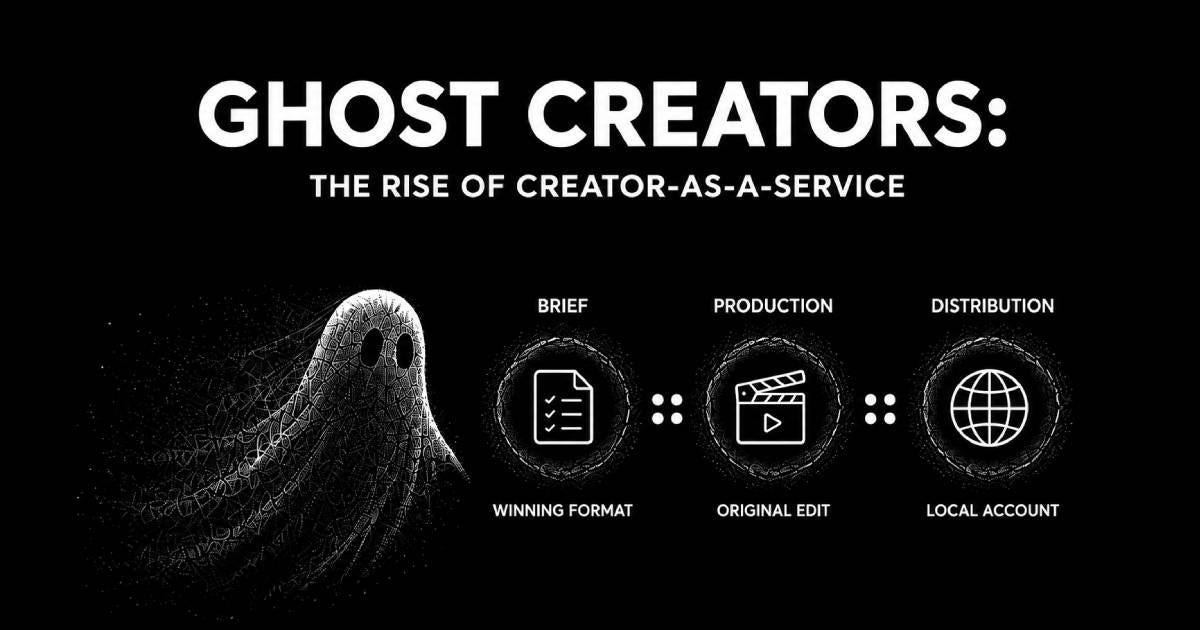
But the same shift that took us from TV celebrities to internet creators is happening again. A new category is rising, the Ghost Creators: Everyday people producing content following specific briefs on dedicated accounts.
This edition breaks down what Ghost Creators are, why they’ve become one of the most profitable acquisition channels, and how to use them to drive growth.
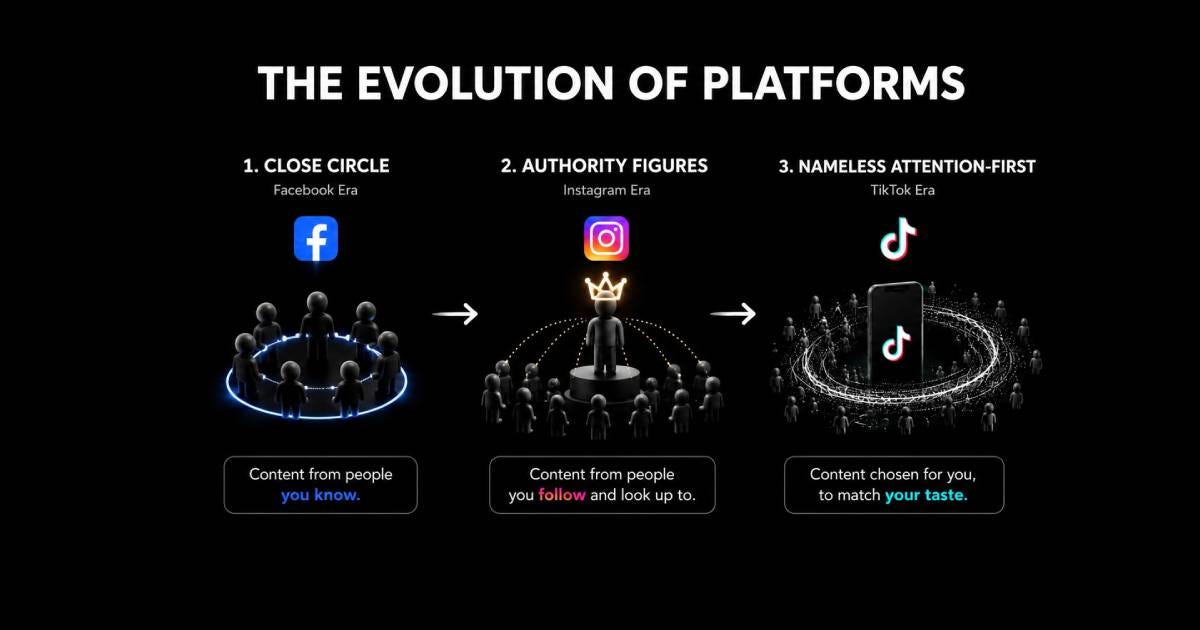
The Evolution of Platforms
To understand Ghost Creators, you first need to understand how social media platforms evolved. Most started with close-circle content (Facebook), then shifted to authority-figure content (Instagram), and finally moved to nameless attention-first content (TikTok).
This evolution was driven by cultural & generational shifts, but above all by how platforms reshaped themselves to make you consume more. Their goal was never to create a safe space for friends or build great online communities, it has always been to keep you engaged as long as possible. So their algorithms increasingly rewarded accounts that could capture and hold your attention, while an account’s authority mattered less and less.
This is why “everyday people” with no audience can rack up millions of views on brand-new accounts. As long as they follow proven attention-first formats that make people stop, watch, and interact, the algorithm will push their content.
How Performance Shifted (Authority to Attention)
As internet creators’ audiences grew, they became a bigger part of people’s lives, carrying values and trust that brands would love to inherit. So working with the right internet creator became more powerful than ever for brand-driven goals or specific campaigns.
But alongside that, internet creators became over-solicited, which made collaborations super expensive. They also grew more tied to their specific editorial line, which made them less flexible when it came to executing a performance-driven brief.
Internet creators can’t just copy-paste a winning format handed to them by a company, it would break the voice their audience follows them for. And since the algorithm now rewards format over authority, that’s a real limitation for performance-driven campaigns.
This is why performance-driven social campaigns shifted from authority (campaigns with influencers) to attention (campaigns with Ghost Creators).
For the price of one post from an internet creator which won’t even follow your brief exactly, you can get around 500 posts from 25 different Ghost Creators over a few weeks.
The Rise of Ghost Creators
Ghost Creators sit somewhere between internet creators and brand ambassadors. Their job is to produce content following specific briefs published on dedicated accounts set up for collaborations.
Most of Ghost Creators don’t have a large personal following or a distinct editorial voice. They’re simply people who love creating content and can execute a precise brief with discipline. I think of them as “Creator-as-a-Service”: they know how to produce & distribute content according to specific briefs, so they offer this service to different companies, helping them scale their programs.
They can produce different types of content, as long as it follows specific briefs based on proven winning formats. The most popular type of content are obviously UGC videos, but they can also produce UGC slideshows, AI videos, animated videos, faceless content…
At THE QUEST, one of our apps crossed 130M+ views on TikTok with slideshows powered by ghost creators. Another hit #7 in Health & Fitness in the U.S. with AI videos. The latest app I’m working on scaled from 0 to 10M users in just 8 months, driven entirely by 250+ ghost creators running my proven winning formats.
Where to find your first Ghost Creators
Finding ghost creators isn’t hard once you know where to look. The goal is to spot people who naturally produce the kind of content you need and bring them into your system before they’ve built the audience (and the rates) that come with a personal brand.
1/ TikTok & Instagram outreach to accounts with winning posts
You’re looking for people who match your persona (so your audience can identify with them) and already have a few winning posts. These profiles usually don’t do collabs, so they’re happy to be asked, and their rates are super reasonable.
You can do this manually or pay people to do it. On my side, I pay students $50/week to do it across all my target countries, and I’ve managed to build a system to automate it with my farm (Building a TikTok & Instagram Farm).
2/ College & University communities
Students film constantly, learn fast, and want flexible income, which makes them great potential ghost creators. Groups tied to marketing, film, or media programs tend to be the most interested. Google the top schools in your target market, then track down their subreddits (usually r/[SchoolName]) or find their Discords & private forums.
On my side, I focused on the University of Texas at Austin. I even went there in person to promote my latest app and recruit people for my Ghost Creators program.
3/ Competitors’ ghost creators
If another company in your space is already working with creators, their top performers have proven they can deliver, so they’re worth pursuing. The first challenge is to find them, you’ve got a few ways to do this:
A/ Check competitors’ social media accounts.
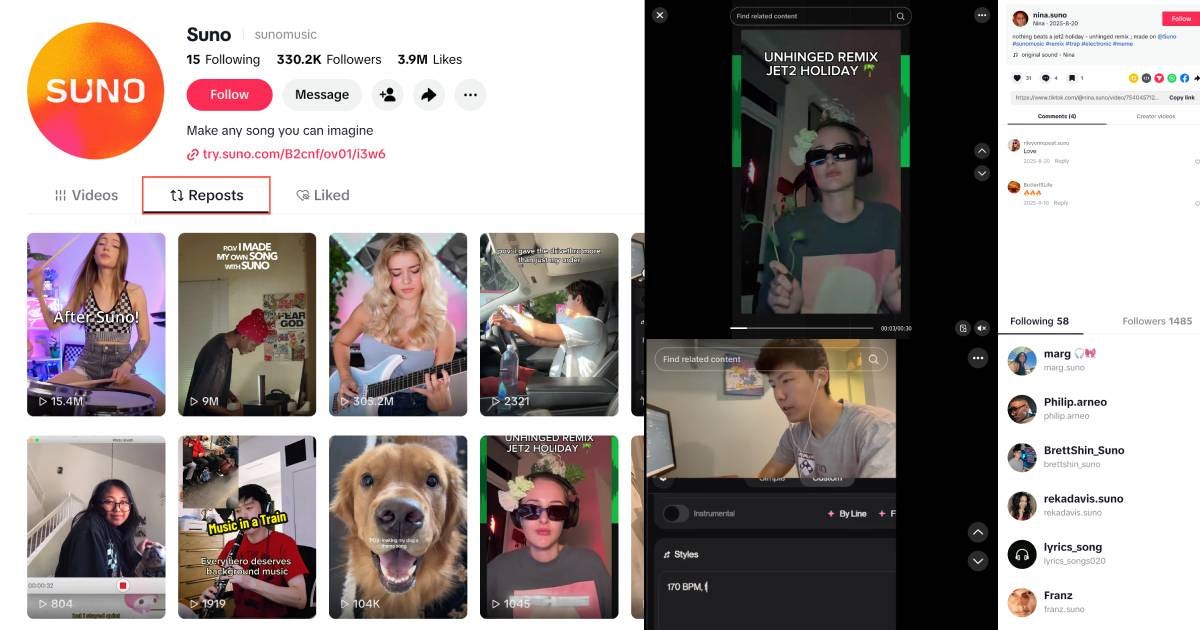
Most of the time, companies follow (or are followed by) their creators and interact with their content. Their reposts are especially useful, scroll through them and you can surface their entire creator roster.
B/ Search for specific hashtags.
Companies often give their creators a dedicated hashtag to make tracking easier. For mobile apps, it’s usually “#[COMPANY NAME]APP”. Once you find one creator’s profile, you can often find the shared hashtag, and from there trace your way back to every creator in the program.
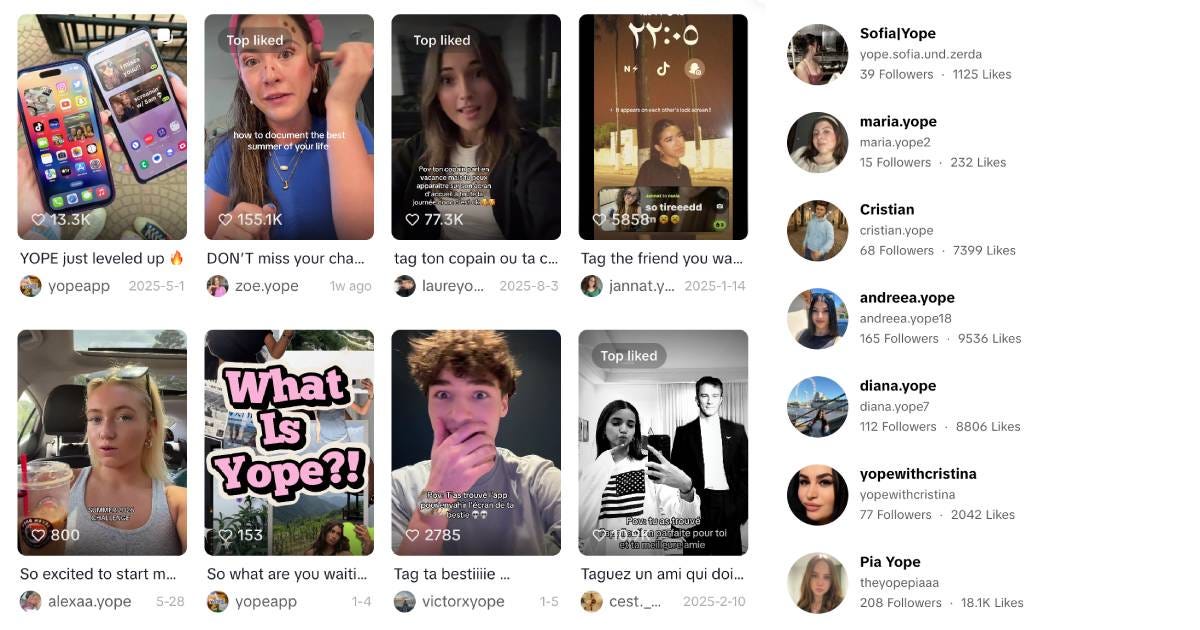
B/ Search for specific handles.
Creators often work the company name right into their username, think “NAME[company]”, as a way to signal the collaboration or look more legit. Run the company name through the platform’s search and you’ll often surface a cluster of these accounts at once. From there, each one is a thread you can pull: check who they follow and interact with, and you’ll usually find more creators in the same network.
Once you’ve built your list of creators worth pursuing, the real work begins: getting them to respond. This is where most people stumble. A sloppy, generic message gets ignored, and worse, reaching out the wrong way can tip off the competitor that you’re poaching their network. Here’s how to maximize your chances to get replies:
A/ Contact the creator account directly.
This is the easy route, but you’ll likely get very few replies, creator accounts are usually monitored by the company (since they’re dedicated to collabs), so the creator won’t risk responding.
B/ Contact the creator’s personal account.
The best strategy is to find the creator’s personal profile. Creator accounts often follow, get followed by, and interact with their owner’s personal account, so you can usually trace your way back to it pretty easily. Reposts help here too. You can scroll through what the creator account has reshared and you’ll often spot their personal account in the mix. Once you’re there, you can reach them via TikTok DM, or by email if there’s an address or linked site.
As for the message itself, be direct and upfront. Don’t hide that you’ve seen their work for another company, mention it, it shows you’ve done your homework and that you’re reaching out to them specifically, not blasting a template. Keep it short: who you are, why you like their content, and what you’re offering (ideally with a clear rate or a hook that beats their current deal). Creators get a lot of vague “collab?” messages, so the ones that stand out are concrete and respectful of their time.
4/ Student job and UGC job marketplaces
There are plenty of student & UGC marketplaces full of people who want exactly this kind of work. It’s less “authentic,” but fast and dependable, and these creators expect paid, structured briefs from the start. Platforms worth checking include Home From College (student-focused, great for campus ambassadors), SideShift (TikTok/Reels-native UGC creators), UGC Tank, AirTasker…
5/ Your company’s power users
They already use the product and like it, so the content sells itself. A real fan is easier to work with than someone you have to convince first.
The 3 Success Factors of Ghost Creators
When you start working with Ghost Creators, you quickly realize the results swing massively from one creator to the next. Some print views, others go nowhere with the exact same budget. The difference always comes down to the same three success factors:
A/ The quality of winning formats briefs (Lab)
The key difference with classic internet creators is that Ghost Creators don’t invent. They execute. Which means a big part of their performance depends on what you hand them.
As I covered in LSDCP: The Full-Funnel Marketing Framework for Consumer Apps, the main job when distributing on social media platforms is to find replicable high-performing creatives (winning formats). Once you’ve found them, you can create clear briefs for your Ghost Creators, and they should go viral and bring acquisition.
A proper brief includes:
3 to 5 reference videos that already worked
The exact format structure (hook → demo → CTA, etc.)
A list of variables they can swap (text overlay, B-roll, music)
A list of variables they can’t touch (the hook, the CTA placement)
Example of a winning format
Let’s stick with the Suno example.
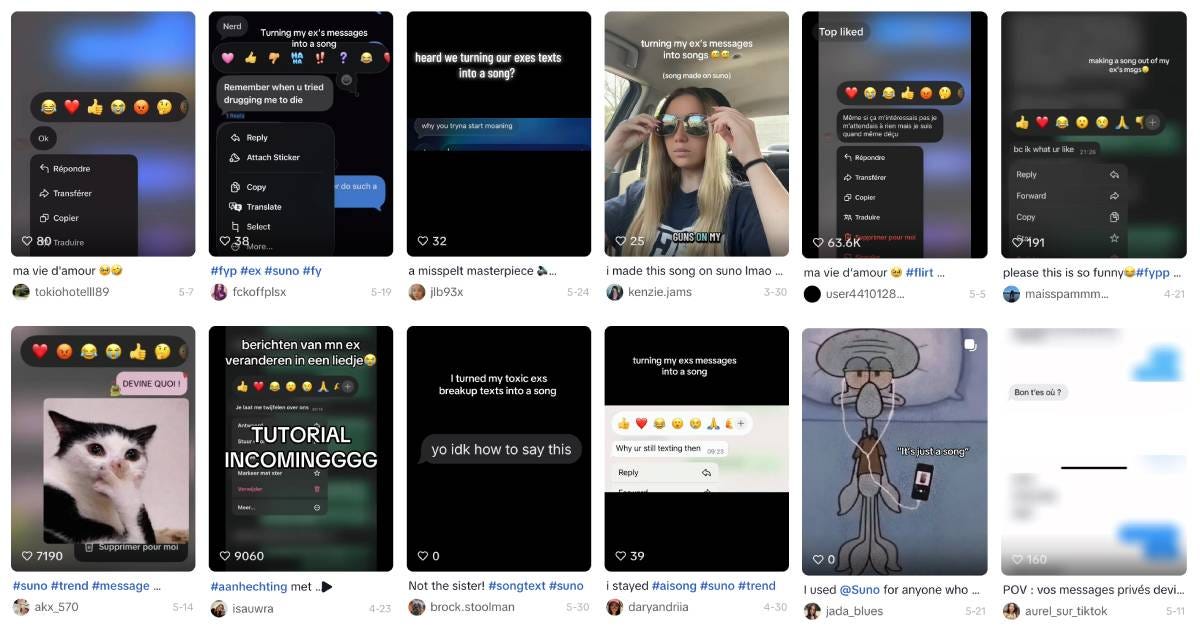
Format name: Turning my X messages into a song
1/ Reference videos that already worked:
https://www.tiktok.com/@p1nk_n4il/video/7630701754065243414 🇺🇸
https://www.tiktok.com/@bulle.00/video/7634970463302798614 🇫🇷
https://www.tiktok.com/@brenpaladino/video/7632035769237998866 🇪🇸
2/ The exact format structure
The video is short (15–30 seconds) and follows a fixed skeleton:
Hook pinned at the top of the screen (the premise: “I turned my ex’s messages into a song”)
Real text-message screenshots displayed on screen, scrolling or cutting in sync with the lyrics
A Suno-generated song playing underneath, with the on-screen messages being the lyrics you hear
The payoff is automatic: the audience stays to hear how the real texts sound as a sung track, which is the curiosity gap the hook opens
The product demo is baked in, you literally can’t deliver the video without Suno doing the work, so the app gets showcased without it ever feeling like an ad.
3/ Variables they can swap
The messages themselves (the actual conversation, the core of every video, different every time)
The music genre / vibe (country, emo ballad, pop-punk, Broadway, etc., this alone makes each video feel new)
Text overlay styling and B-roll (e.g. the creator lip-syncing over the texts, vs. just the screenshots)
The relationship angle (it works with an ex, but the same skeleton runs on texts from a boss, a parent, a kid, a group chat)
4/ Variables they can’t touch
The hook (locked: it’s the curiosity gap that earns the watch time, change it and the format stops working)
The format structure (texts on screen + matching song underneath)
The fact that the song is made in Suno (it’s the whole point, swap the tool and you’re promoting someone else)
B/ The quality of Ghost Creator’s execution (Production)
You judge a Ghost Creator on one thing: their ability to understand a brief and produce content that stays faithful to it.
The best Ghost Creators are actors and operators, not artists. They understand the codes of social media platforms, know how to translate your brief into native content, and can reproduce winning formats without losing what made them work in the first place.
To better judge the Ghost Creator’s execution, you need to track your ghost creators activity & performance properly. A Ghost Creator program only works if you can identify the top Ghost Creator performers, and cut the ones that don’t deliver.
Personally, I use Viral App to track the performance of all my Ghost Creators in one dashboard. It lets me see who is driving views, who is underperforming, and where I should double down.

C/ The quality of the dedicated accounts (Distribution)
Like we said, fresh accounts with no authority can get reach easily now. But that only holds if the account is set up and managed properly, and the first priority is that the creator is actually based in the geography you’re targeting.
As with your farm (Building TikTok & Instagram Farm), you could allow ghost creators with a proxy setup, but it’s not worth it for Ghost Creators, too costly and too complicated to maintain. A real creator physically located in your target market solves the problem natively, with none of the friction.
The other key piece is warming the account, not just at creation, but throughout the entire collaboration. Creators can’t just open an account, post, and leave. An account that only goes live to drop branded content and nothing else looks artificial to the algorithm, which kills its reach. They need to behave like a normal user: scrolling, liking, commenting, and posting regularly so the account stays trusted and keeps getting distributed.
Here’s how I keep account quality high in practice:
I ask every Ghost Creator to send me their IP, so I can verify the account is genuinely local to the market it’s supposed to serve.
I built a platform to guide them through proper warmup when the account is first created, so no one skips the step or does it wrong.
Once an account is active, I run an audience analysis on the account to confirm where audience are coming from.
Scale with Ghost Creators Networks
After hiring and managing your first Ghost Creators, you’ll quickly realize it’s a volume game. Once your winning-format briefs are solid, the more Ghost Creators you have, the more high performers you’ll find, and the more your results compound.
The mistake most people make is trying to do everything themselves: recruiting Ghost Creators, managing them, keeping briefs updated, finding new winning formats on the side, expanding to new countries. It gets exhausting, and it doesn’t perform well.
But you can flip the system.
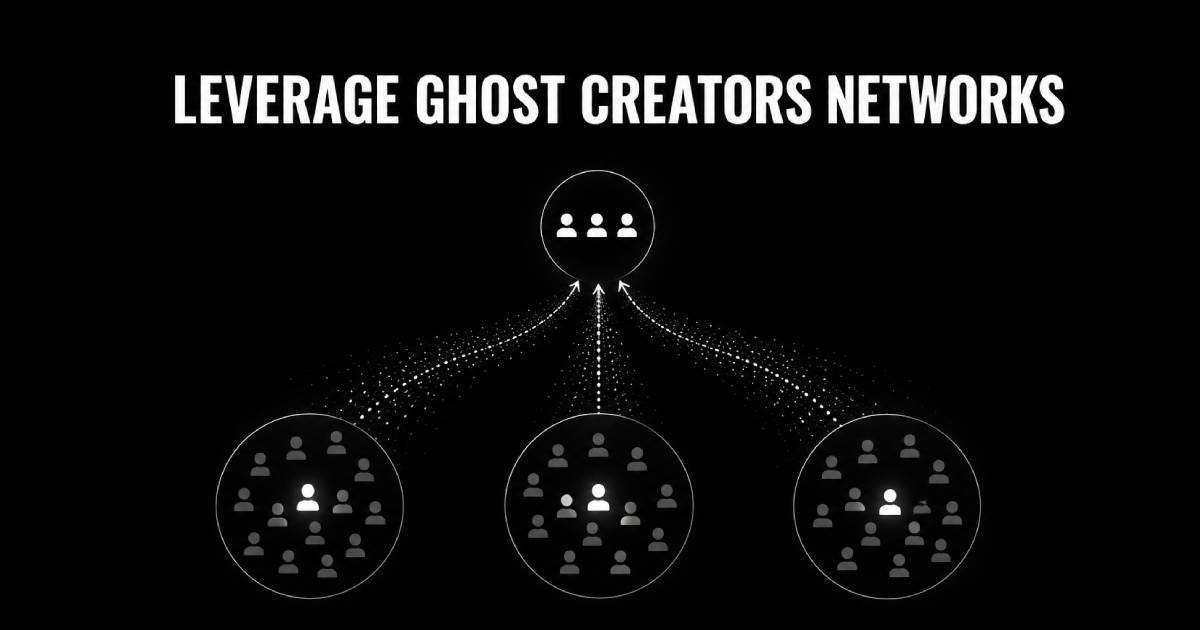
Go back to the three success factors (Lab, Production, Distribution). Only one can’t be outsourced: the Lab. No one can find your winning formats better than you can, because no one knows your product and your customers like you do.
The other two, Production and Distribution, are easy to externalize.
That’s where Ghost Creators Networks come in.
You can partner with people who already have their own network and will put it to work for your program. They’ll recruit, onboard, and manage the Ghost Creators for you, all while following your winning-format briefs.
This is especially valuable when you’re entering new markets. Breaking into a country where you have no presence means finding local Ghost Creators from scratch, and managing them in a language you don’t speak adds real friction. Partnering with people who already manage local Ghost Creators solves both problems at once: they have creators on the ground and handle everything in their own language. You get authentic local distribution for your international winning formats, without the hassle of managing it yourself.
If this topic interests you, let me know and I’ll share a full edition about it:
How to work with existing Ghost Creator networks
→ Find the top agencies, campaign managers, etc.How to manage these Ghost Creator networks in one single environment
→ Build your own Ghost Creator engineHow to handle arbitrage when you have 100+ active Ghost Creators
→ Keep the good ones, cut the bad ones to optimize ROI
👋 Awesome you made it to the end — hope this helps!
If you wanna chat about mobile apps, feel free to DM me on X.
And if you’re building a consumer mobile app, join the Discord!